You step outside to enjoy a quiet evening in your backyard, maybe waiting for the barbecue to heat up, when you glance over at your air conditioning unit. It looks a bit… tipsy, doesn’t it? Instead of sitting flat and proud, that heavy metal box is leaning to the left like it’s had a rough week.
Why is My AC Unit Sinking?
Here’s the thing about living in Ogden—we love the mountains, but the ground underneath us isn’t always as steady as the peaks. It’s frustrating, right? You pour a concrete pad, you think it’s solid, and then a few years later, gravity and geology conspire against you.
The main culprit usually isn’t the concrete itself; it’s the soil stability beneath it.
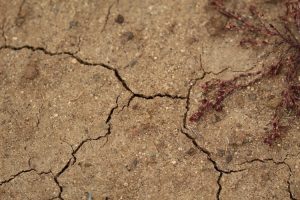
When homes are built, the earth around the foundation is backfilled. Over time, that dirt settles. It’s natural, but it’s annoying. Add in our Utah weather—where we get soaking wet springs followed by bone-dry summers—and you get soil that expands and contracts. This movement creates voids or air pockets under your concrete slabs. Once those voids open up, the heavy weight of your AC unit pushes the pad down into the empty space.
And let’s be honest, those condenser units aren’t exactly light. We are talking about hundreds of pounds vibrating constantly whenever the thermostat clicks on. That vibration acts almost like a compactor, shaking the soil loose and accelerating the sinking process.
Is a Tilted AC Pad Actually a Problem?
You might look at that leaning pad and think, “Eh, it’s just cosmetic. I’ll plant a bush in front of it.”
I get the temptation to ignore it. Home maintenance lists are never-ending, and if the air inside is still cold, why bother? But here is where I have to be the bearer of bad news. A sinking AC pad is actually a ticking time bomb for your HVAC system.
The Strain on the Lines
Your AC unit connects to your house via copper refrigerant lines. These lines are rigid; they aren’t meant to flex. When the pad sinks, it pulls the unit down, putting tensile stress on the coolant lines. If the movement is severe enough, those lines can kink or even snap.
If a line snaps, you lose your refrigerant (Freon or Puron), and suddenly you’re paying for an emergency HVAC repair that costs way more than lifting a slab.
The Lubrication Issue
Inside that condenser is a compressor—the heart of the system. Compressors rely on oil for lubrication. However, these motors are designed to run on a level plane. When the unit tilts beyond a certain degree, the oil can pool on one side, leaving other parts of the motor dry.
Running a compressor without proper lubrication is like running your car engine without oil. It causes overheating, friction, and eventually, a seized motor.
The Fan Balance
Have you noticed the unit getting louder lately? When the housing is off-kilter, the fan inside spins on an uneven axis. This causes wobbling, which wears out the bearings and creates that rattling noise that keeps you up at night.
The Fix: Concrete Lifting vs. Replacement
So, you know it’s broken. Now, how do we fix it?
Years ago, your only real option was the “rip and replace” method. You’d hire a guy with a jackhammer to smash the old pad, haul away the debris, build a new form, pour wet cement, and wait days for it to cure. Meanwhile, your AC unit is disconnected, and your house is getting hot.
Nobody wants that.
Enter AC pad lifting, often called slab jacking or Concrete Leveling. It’s faster, cleaner, and honestly, fascinating to watch. There are two main ways we handle this: traditional mudjacking and the more modern polyjacking.
A Quick Comparison
| Feature | Mudjacking (Cement Slurry) | Polyjacking (Polyurethane Foam) |
|---|---|---|
| Material | Sand, water, and cement mixture | High-density expanding foam |
| Hole Size | Larger (1-2 inches) | Tiny (penny or dime-sized) |
| Weight | Heavy (adds load to soil) | Lightweight (doesn’t burden soil) |
| Cure Time | 24-48 hours | 15-30 minutes |
| Longevity | Good, but can settle again | Excellent, waterproof |
How Does the Process Work?
Let me walk you through what happens when Mud Dog Jacking shows up at your Ogden home. It’s surprisingly low-impact.
First, we assess the tilt. We need to know exactly where the voids are. Then, we drill a few strategically placed holes in the existing concrete pad. If we are using polyurethane foam (which we highly recommend for smaller pads like this), these holes are tiny—barely noticeable.
We insert an injection port and start pumping.
This is the cool part. The material expands underneath the slab, filling every nook and cranny of those soil voids we talked about earlier. As the foam expands, it exerts upward pressure. Slowly, carefully, the concrete pad begins to rise.
We lift it until it’s perfectly level again.
Once it’s level, we patch the tiny holes with a cement mixture that matches your existing concrete as closely as possible. The whole thing usually takes less than two hours. You don’t even have to disconnect the AC unit in most cases, which saves you the cost of calling an HVAC technician.
Can’t I Just Shove a Rock Under It?
I love the DIY spirit. Truly, I do. It’s what makes homeownership rewarding. But I have seen some interesting attempts to fix sinking AC pads in Utah.
People try to wedge 2x4s, bricks, or slate tiles under the low side of the concrete. Here is why that backfires.
When you shim the edge of a concrete slab, you are creating what engineers call a point load. Instead of the weight being distributed evenly across the ground, all that weight is now resting on that one rock or brick you shoved under there.
Concrete is strong in compression, but it has terrible tensile strength. When you prop up one corner and leave the middle unsupported (because the soil has settled away from it), the slab will eventually snap in half. Now you have a broken pad and a sinking AC unit.
Plus, shims don’t fix the underlying issue: the soil void. The ground will keep settling, and next year, you’ll be out there shoving another rock under it until the whole thing looks like a Jenga tower.
Why Polyurethane is Usually Best for AC Pads
While mudjacking (the cement slurry method) is great for massive projects like driveways or warehouse floors, polyurethane foam lifting is usually the champion for AC pads.
Why? Because of the weight.
Remember, the soil settled because it couldn’t handle the load or because water washed it away. Mudjacking slurry is heavy—about 100 lbs per cubic foot. If you pump heavy cement onto weak soil, you run the risk of the whole thing sinking again later.
Polyurethane foam is incredibly strong but featherlight—about 3-4 lbs per cubic foot. It lifts the concrete without adding burden to the already stressed soil. Plus, the foam is waterproof. If you have drainage issues in your yard (a common problem in Ogden neighborhoods near the bench), the foam won’t wash away or degrade. It creates a permanent, water-resistant base for your equipment.
Signs You Need to Call a Pro
How do you know if it’s time to pick up the phone?
- Visual Tilt: If you can see it leaning with the naked eye, it’s too far gone.
- Stressed Lines: Look at the copper tubes and electrical conduit connecting the unit to the house. Are they pulled tight?
- Pooling Water: Does water puddle on one side of the pad after a rainstorm?
- Cracks: Are there hairline cracks forming across the surface of the pad?
It is also worth noting that if your AC unit is relatively new, having it sit on an unlevel surface might void the manufacturer’s warranty. Those companies look for any reason to deny a claim, and “improper installation/maintenance of base” is a favorite excuse.
The Cost Factor: Is It Worth It?
Let’s talk money. Nobody likes surprise expenses.
You might worry that calling a professional concrete lifter is going to break the bank. But compare it to the alternatives. Pouring a brand new pad involves demolition, hauling, materials, and labor—plus the cost of an HVAC tech to move the unit back and forth. That gets expensive fast.
Concrete lifting typically costs a fraction of the price of replacement—often 50% to 70% less.
But the real savings come from protecting the AC unit itself. Replacing a compressor or a whole condenser unit can run thousands of dollars. Spending a little bit now to level the pad is essentially an insurance policy for your HVAC system.
And let’s not forget Curb appeal. If you are thinking of selling your home down the line, inspectors catch these things immediately. A level, well-maintained mechanical area signals to buyers that you took care of the house.
Keeping It Level: Prevention Tips
Once we get your pad lifted, you want to keep it that way. While we can stabilize the slab, managing the environment around it helps too.
Check your drainage. Ensure your rain gutters aren’t dumping water right next to the AC unit. Water softens the soil and leads to settling. Extend those downspouts at least five feet away from the foundation.
Seal the gaps. If there is a gap between your house foundation and the AC pad, seal it with a high-quality polyurethane caulk. This stops water from running down between the concrete structures and washing out the soil.
Monitor the soil. If you have critters—voles or ground squirrels—digging under the slab, get them under control. They can create voids faster than you’d think.
A Quick Fix for a Cool Home
Look, a sinking AC pad isn’t the end of the world, but it is a nuisance that turns into a nightmare if ignored. It affects your comfort, your wallet, and the longevity of your home’s most expensive appliance. The good news is that the solution is quick, relatively painless, and incredibly effective.
You don’t have to live with a crooked condenser or listen to that fan rattle for another summer.
If you are in Ogden and noticing that familiar lean, let’s get it sorted out before the heat really kicks in. At Mud Dog Jacking, we specialize in lifting and stabilizing concrete so you can get back to enjoying your backyard without worrying about your HVAC lines snapping.
Don’t let a sinking pad ruin your summer comfort. Call us today at 801-644-9122 or visit our website to Request a Free Quote. We’ll get you back on solid ground in no time.