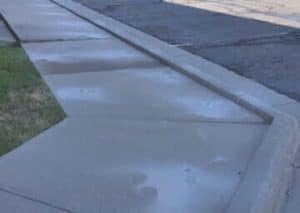
You know that jarring thump your tires make every time you pull into the garage? It’s that annoying little lip of concrete that seems to have grown an inch or two over the last couple of years, but honestly, it’s not the Driveway getting higher—it’s your Garage Floor sinking.
Wait, Why is My Garage Floor Sinking in the First Place?
It feels a bit like a betrayal, doesn’t it? You pay good money for a home, and you expect the ground to stay put. But if you live around Ogden, UT, you already know the soil here has a mind of its own. Between the freezing winters and the dry, hot summers, the ground beneath your concrete slab is constantly moving, expanding, and shrinking.
Here’s the thing. When concrete is poured, it sits on a layer of soil or fill dirt. Over time, that soil compacts. Sometimes it settles naturally, and other times, water finds a way underneath the slab and washes the dirt away. This creates what we call a void.
Think of it like a hollow pocket under your floor. The concrete is heavy—really heavy—and gravity is undefeated. Eventually, without that dirt to support it, the slab cracks and settles into the empty space. That’s when you get those unsightly cracks, the uneven Steps, and that pooling water in the corner that refuses to drain out the door.
The “Rip and Replace” Nightmare
So, what do you do about it?
For the longest time, the default answer was to tear it all out. You’d hire a crew to come in with jackhammers, make a massive mess, haul away tons of broken concrete, and then pour a brand-new slab.
It sounds logical, sure. But have you ever lived through a total concrete replacement? It’s loud, dusty, and incredibly expensive. Plus, fresh concrete takes time to cure. We aren’t just talking about a day or two. You’re looking at weeks before you can park your truck on it without risking damage.
And honestly, do you want to be parking on the street during an Ogden winter or hauling groceries halfway down the block because your driveway is a construction zone? Probably not. The worst part is that replacing the concrete doesn’t actually fix the soil problem underneath. You’re just putting a heavy new slab on the same bad dirt.
There is a Better Way: Concrete Lifting
This is where concrete lifting comes into the picture. You might hear people in the industry call it slab jacking, mudjacking, or polyjacking. While there are technical differences between those terms—which we will get to in a second—the concept is pretty much the same.
Instead of destroying the concrete, we save it.
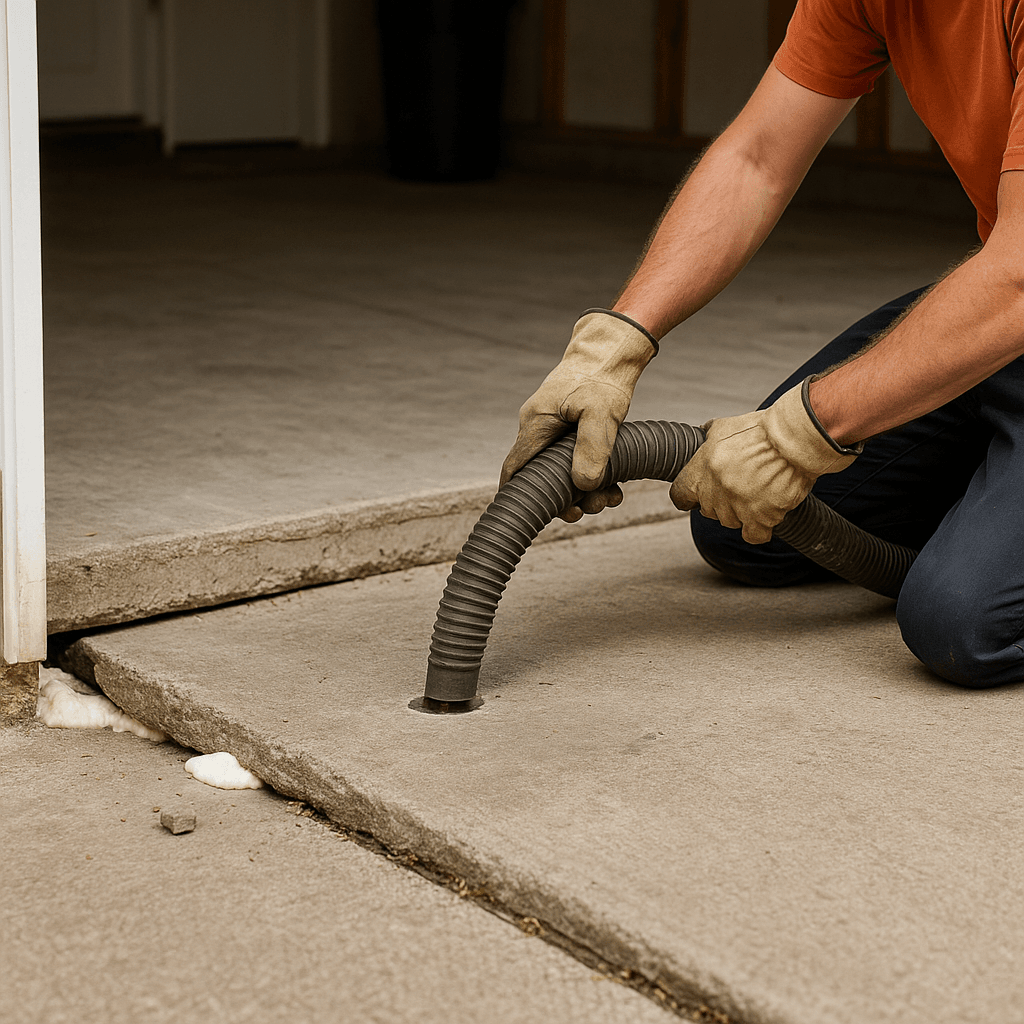
We drill small holes into the sinking slab and pump material underneath it. As that material fills the voids we talked about earlier, it pressurizes the space. Once there is nowhere else for the material to go, the pressure starts to lift the concrete slab back up to its original level.
It’s kind of like inflating a tire, except the tire is a few tons of concrete, and the air is a specialized mixture designed to hold weight.
The Breakdown: Mudjacking vs. Polyjacking
You might be wondering what exactly we are pumping under there. Generally, there are two main schools of thought here, and it helps to know the difference.
Mudjacking is the traditional method. It uses a slurry mixture—usually a blend of water, dirt, sand, and cement. It’s tried and true. It’s heavy, which can be good for certain Applications, but it requires larger drill holes (about the size of a soda can top).
Polyjacking (or polyurethane foam lifting) is the modern evolution. We inject a two-part expanding foam. It’s lightweight, waterproof, and cures almost instantly.
| Feature | Mudjacking | Polyjacking |
|---|---|---|
| Material | Sand/Cement Slurry | High-Density Foam |
| Hole Size | 1-2 inches | 5/8 inch (size of a penny) |
| Cure Time | 24-48 Hours | 15-30 Minutes |
| Weight | Heavy | Lightweight |
For most homeowners in Northern Utah, this isn’t just about fixing a cosmetic issue; it’s about structural integrity.
Why Homeowners Are Skipping the Replacement
It’s not just about avoiding the jackhammer noise. There are some serious practical reasons why garage concrete lifting is taking over as the preferred method for fixing sunken slabs.
1. It Saves You a Lot of Money
Let’s talk numbers for a second. Ripping out a garage floor and pouring a new one is a major construction project. You are paying for demolition, disposal, materials, and specialized labor. Concrete lifting usually costs a fraction of that price—often 50% to 70% less than replacement. That’s money you can keep in your pocket or use for other renovations.
2. Immediate Use
This is a big one. With concrete lifting, especially if we are using polyurethane foam, you can drive your car on the garage floor pretty much as soon as we leave. Even with traditional mudjacking, the wait time is minimal compared to fresh concrete. You don’t have to rearrange your life for a month.
3. It Fixes the Drainage
You know how water is supposed to flow out of your garage? When a slab settles, it often tilts back toward the house. That is bad news. Water pooling against your foundation can lead to much bigger headaches, like basement leaks or structural damage. Lifting the slab restores the proper grade, so water runs away from your home, not into it.
Can I Just Fix This Myself?
I get it. We live in the era of YouTube university. You look at that crack in the floor, head to the hardware store, and buy a bag of self-leveling sealant or a patch kit.
Here is the harsh truth: Surface patches do not fix the problem.
Putting a patch on top of a crack is like putting a band-aid on a broken leg. It might cover the ugliness for a few weeks, but the bone underneath is still broken. The slab is sinking because there is no support underneath it. If you don’t fill that void, the slab will continue to move. The crack will open up again, usually wider than before, and now you have an ugly patch of different-colored cement stuck to your floor to deal with.
Plus, the equipment needed to pressurize and lift a slab isn’t something you can rent for the afternoon. It requires precise control. If you pump too much material too fast, you can crack the slab further or even blow out a foundation wall. This is one of those times where calling a pro isn’t just a suggestion; it’s a safety requirement.
What Happens When Mud Dog Jacking Arrives?
So, you’ve decided to get the floor fixed. What does that day actually look like? It’s honestly pretty boring, which is exactly what you want.
First, we assess the situation. We look at where the slab has dropped and try to identify where the voids are. Then, we drill a series of small, strategic holes. If we are using foam, these holes are tiny—you’ll barely notice them once we are done.
Next comes the injection. This is the cool part. We hook up the hose and start pumping the material beneath the slab. We watch the floor closely. It happens slowly, but you can actually see the concrete floor rising back into place. We check the levels constantly to make sure it’s even with the surrounding concrete.
Once the slab is level, we stop. We patch the small holes with a concrete mixture that matches your floor as closely as possible.
And that’s it. We clean up our mess, pack up the truck, and get out of your hair. No dumpster in the driveway, no Caution tape, no waiting weeks for things to dry.
Is It Permanent?
This is the most common question we get. “If the soil moved once, won’t it move again?”
It’s a fair question. While we can’t control Mother Nature or the shifting tectonic plates of the Wasatch Front, concrete lifting is a long-term solution.
The material we pump underneath—whether it’s slurry or foam—is stable. It doesn’t shrink. In fact, by filling the void, we are actually stabilizing the sub-soil. We are compacting the loose dirt that caused the problem in the first place.
Especially with polyurethane foam, the material is inert. It doesn’t break down over time, it doesn’t rot, and bugs don’t eat it. It’s also waterproof, so it creates a barrier that stops water from washing away the soil in the future. Unless there is a massive geological shift or a broken water main washing everything away, your garage floor should stay put for a very long time.
A Note on Aesthetics
Will the cracks disappear? No, not entirely.
Lifting the concrete closes the gap, bringing the two sides of the crack back to level with each other. The tripping hazard disappears. The unevenness disappears. But the crack itself—the line in the concrete—will still be there.
However, once the slab is level, you can caulk that crack, and it will actually stay sealed. Or, if you want to get fancy, now is the perfect time to apply an epoxy coating to the garage floor. Since the floor is stable and level, the epoxy will look great and last for years. If you tried to epoxy a sinking floor, the coating would crack and peel as the floor continued to move.
Why Ogden Homes Are Prone to This
Let’s circle back to where we live. Ogden has a unique mix of soil types, from sandy loams to heavy clays. When you combine that with our freeze-thaw cycles, concrete takes a beating.
When water in the soil freezes, it expands and pushes up on the concrete (frost heave). When it melts, it shrinks back down. Over years, this creates pockets and shifts the soil. If your downspouts aren’t extended far enough or if your driveway grade is flat, water sits right next to the garage foundation.
It enters the soil, turns the dirt into mud, and eventually, the weight of your car squeezes that mud out or compacts it. That’s why you usually see the sinking happen right where the driveway meets the garage—it’s the high-traffic area where the soil is most vulnerable.
Don’t Wait Until It Breaks
There is a tendency to ignore these things. You think, “Eh, it’s just a little bump.” But these problems don’t get better on their own. They get worse.
A small void becomes a large void. A small crack becomes a shattered slab. Eventually, the concrete can crack into so many pieces that lifting it becomes impossible, and then you are stuck with the expensive replacement option.
Fixing the grade of your garage floor also protects your car’s suspension and prevents those nasty toe-stubbing incidents. It keeps the value of your home up, too. Nothing scares off a potential buyer quicker than a massive structural crack running down the middle of the garage.
Ready to Level Up?
It’s easy to put off home maintenance, but fixing your sinking garage concrete is one of the fastest, most satisfying repairs you can make. It restores the look of your home, prevents water damage, and removes those annoying tripping hazards, all in a single afternoon.
Don’t let a sinking slab ruin your garage or your property value. Give Mud Dog Jacking a call at 801-644-9122 to discuss your options. Request a Free Quote today and let’s get your concrete back on solid ground.