There’s nothing quite like pulling into your Driveway after a long day, only to feel that jarring thump as your tires hit an uneven concrete slab. It’s annoying, sure, but it’s also a little worrying when you see just how much that Sidewalk or Patio has settled over the last few years. If you’re a homeowner here in Ogden, you’ve probably noticed that our unique mix of soil and weather can be pretty tough on concrete.
Why Is My Concrete Sinking Anyway?
Before we talk about how to fix it, we have to talk about why it’s breaking in the first place. You know what? It’s usually not the concrete’s fault. Concrete is heavy, dense, and remarkably stubborn. The problem is almost always the dirt underneath it.
Here in Utah, we deal with something called freeze-thaw cycles. In the winter, moisture gets into the soil under your driveway, freezes, and expands. This pushes the concrete up (that’s the “heave”). Then, spring comes around, the ice melts, and everything settles back down. But it never settles back exactly the way it was. Over time, this creates voids—empty pockets of air—under the slab.
Eventually, the concrete can’t support its own weight over that empty space, and crack, down it goes.
It’s also about the soil composition. We have areas with sandy soil that washes away during heavy rain, and areas with clay that swells like a sponge. Both are tricky. Understanding this is half the battle because whatever repair method you choose needs to address the support system, not just the surface.
The Old School Method: Mudjacking
Let’s start with the classic. You’ve probably heard of this; it’s often used as a catch-all term for lifting concrete. Mudjacking (or slab jacking) has been around for a long time, and honestly, it still works for certain situations.
The process is fairly straightforward. A contractor drills a series of holes—usually about the size of a soda can—into the sunken concrete. Then, they pump a slurry mixture of cement, topsoil, and water (literally “mud”) underneath the slab under high pressure.
This slurry fills up those voids I mentioned earlier. Once the voids are full, the pressure builds up and actually lifts the heavy concrete slab back into place.
The Upside
It is generally cheaper than ripping out the concrete and pouring it fresh. Plus, it uses natural materials.
The Downside
Here’s the thing about mudjacking: it’s heavy. You are trying to fix a problem caused by unstable soil by adding more heavy material on top of it. Sometimes, that extra weight can cause the soil to settle again later. Also, the drill holes are noticeable. They get patched, obviously, but you’ll always see where the work was done.
The Modern Solution: Polyjacking (Polyurethane Injection)
If mudjacking is the grandfather of Concrete Repair, polyjacking is the high-tech grandkid who works in Silicon Valley. This is rapidly becoming the preferred method for residential concrete repair in Ogden, and for good reason.
Instead of pumping a heavy cement slurry under your driveway, we use high-density polyurethane foam. It’s a two-part chemical that reacts as soon as it hits the space under your concrete.
Here is how it goes down:
- We drill tiny holes—about the size of a penny.
- We inject the polymer liquid.
- The liquid expands into a rigid foam (think of it like that spray foam insulation, but incredibly strong and designed for structural support).
Why It’s Winning People Over
The expansion is aggressive. It finds every little nook and cranny in the soil, compressing the loose dirt and creating a rock-hard base. Because it’s lightweight, it doesn’t burden the soil, which means the repair often lasts longer than traditional mudjacking.
Also, it cures in minutes. You can literally park your car on the driveway about 15 minutes after we finish. With mudjacking or concrete replacement, you might be parking on the street for days.
The “Nuclear Option”: Total Replacement
Sometimes, you just have to start over. I hate to say it, but concrete doesn’t last forever. If a slab is pulverized into rubble—we’re talking multiple cracks, crumbling edges, and spalling (that’s when the top surface flakes off)—lifting it won’t help.
Lifting a shattered slab is like trying to lift a jigsaw puzzle; the pieces just won’t stay together.
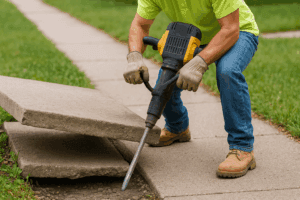
Concrete replacement involves jackhammering out the old slabs, hauling away the debris, re-grading the soil (fixing that base layer), framing it up, and pouring wet concrete.
When Should You Do This?
- When the concrete is structurally unsound (crumbles when you poke it).
- When you want a completely new look or design.
- When the cost of repair approaches 50% of the cost of replacement.
However, keep in mind that this is the most expensive, messy, and time-consuming route. You’re dealing with mixers, dust, noise, and weeks of curing time before you can use the surface again. Plus, fresh concrete will be a different color than your existing, weathered concrete, so patch jobs can look distinct.
The Band-Aid: Concrete Grinding
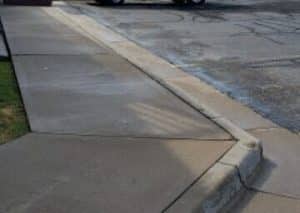
You might have seen this on city sidewalks. If one slab is an inch higher than the other, creating a tripping hazard, you can simply grind down the high edge.
It’s quick. It’s effective at removing the trip hazard. But let’s be real—it’s ugly. It exposes the aggregate (the stones inside the concrete), leaving a rough, scarred patch.
More importantly, grinding doesn’t fix the problem. The slab settled because the soil underneath gave way. If you grind the lip off, you’re ignoring the void underneath. The slab will likely keep sinking, and in a year or two, you’ll have a trip hazard again. It’s a temporary fix, usually best reserved for industrial spots where aesthetics don’t matter.
Quick Comparison Guide
Sometimes it helps to see it all laid out. Here is a quick breakdown of how these methods stack up against each other.
| Feature | Mudjacking | Polyjacking | Replacement |
|---|---|---|---|
| Cost | Low to Moderate | Moderate | High |
| Cure Time | 24-48 Hours | 15-30 Minutes | 2-4 Weeks |
| Drill Hole Size | Large (1-2 inches) | Tiny (5/8 inch) | N/A |
| Durability | Good, but heavy | Excellent, lightweight | Excellent (if new) |
| Mess Factor | High (slurry cleanup) | Very Low | High (demolition) |
Sealing the Deal: Joint Caulking and Crack Repair
We can’t talk about lifting concrete without talking about sealing it. Remember how I said water is the enemy? If you lift your concrete back into place but leave the cracks and expansion joints open, you are just inviting water to rush right back under there.
It’s like bailing out a boat but not plugging the hole.
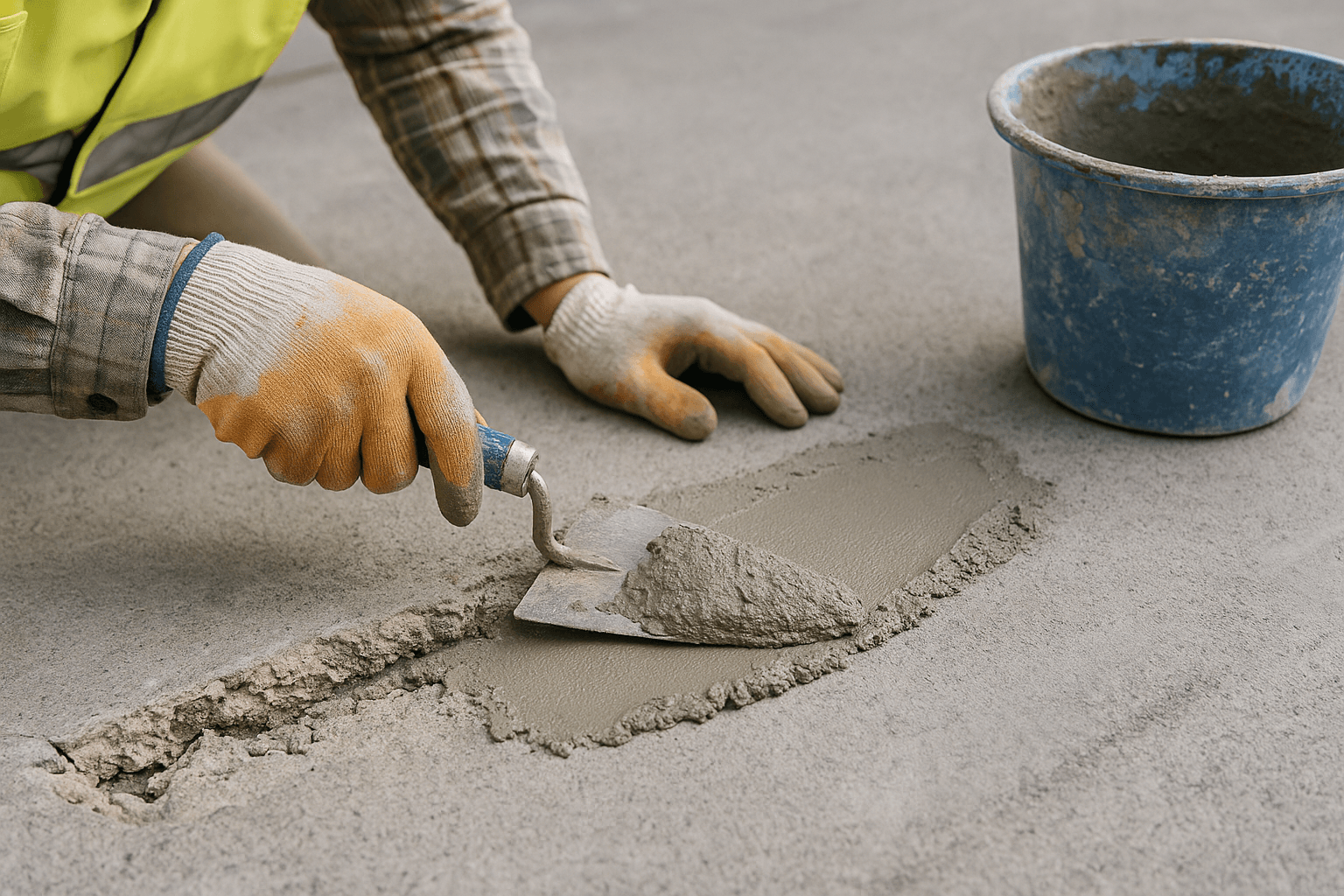
Using a high-quality silicone or polyurethane caulk to seal control joints (those lines cut into the concrete) and any random cracks is vital. This keeps the water on top of the slab where it can flow away, rather than letting it seep into the subgrade to cause more freeze-thaw damage.
In Ogden, where we salt our driveways heavily, sealing also protects the rebar inside the concrete from rusting. Rust expands, and that internal expansion can blow concrete apart from the inside out.
What About DIY?
I get it. We all want to save a buck, and there is a certain satisfaction in fixing things yourself. You can buy bags of concrete patch or tubes of sealant at the hardware store.
For hairline cracks? Go for it. A bottle of liquid crack filler can do wonders for stopping water intrusion on tiny fissures.
But for lifting? Please, don’t try to do it yourself. I’ve seen homeowners try to jack up slabs using car jacks and 2x4s. It is incredibly dangerous. Concrete is heavier than it looks—a small section of driveway can weigh thousands of pounds. If it slips, it can crush hands or feet in an instant.
Furthermore, the “mudjacking kits” you might see online are rarely effective. Without the hydraulic pressure of professional equipment, you can’t force the material deep enough into the voids to provide actual support. You usually just end up with a messy surface and a slab that sinks again two weeks later.
Signs You Need Repair Now (Not Later)
So, how do you know it’s time to call in the pros? It’s not just about aesthetics.
- Water Pooling: If water sits in a puddle near your foundation after rain, that’s bad news. It means the concrete is sloping the wrong way (negative drainage), directing water toward your house. This can lead to basement leaks.
- Trip Hazards: If the height difference between slabs is more than a quarter-inch, it’s a liability. All it takes is one neighbor tripping on your walkway for things to get litigious.
- Hollow Sounds: Grab a broom handle or a golf club and tap on the concrete. Does it sound solid (a high-pitched ping) or hollow (a low-frequency drum sound)? If it sounds hollow, you’ve got voids, and a crack is imminent.
- Doors and Windows Sticking: Sometimes, a sinking patio or porch can actually pull on the structural framing of the house, causing door frames to go out of square.
The Ogden Factor: Why Local Expertise Matters
Concrete work in Utah isn’t the same as concrete work in Arizona or Florida. We have to account for the freeze-thaw cycle, the high alkalinity in some of our soils, and the specific aggregates used in local concrete mixes.
When you hire someone to look at your concrete, you want someone who understands how the benches along the Wasatch Front shift. You want someone who knows that the soil in North Ogden might behave differently than the soil down near the Great Salt Lake.
A generic solution might work for a year, but a solution tailored to our climate is an investment in the longevity of your home. It’s about being proactive rather than reactive. Fixing a small sink now is infinitely cheaper than replacing a shattered driveway five years down the road.
Let’s Get That Concrete Level Again
Ignoring sinking concrete doesn’t make it go away; it usually just gets more expensive to fix as the slab cracks further. Whether it’s your front Steps, the Pool Deck, or the main driveway, getting it lifted and stabilized restores your Curb appeal and removes those dangerous trip hazards.
At Mud Dog Jacking, we specialize in assessing the specific soil conditions of your property to recommend the absolute best method for your situation. We don’t just patch it; we stabilize it for the long haul.
If you are ready to stop tripping over that one uneven square and want a solution that lasts, give us a shout. Call us today at 801-644-9122 or go online to Request a Free Quote. Let’s get you back on solid ground.