You know that jarring, slightly annoying bump you hit every single time you pull your car into the garage? It starts as a minor irritation, but honestly, an uneven Garage Floor is usually a quiet warning sign that the earth underneath your home is giving up. Let’s fix that frustrating ledge right now before it turns into a massive, wallet-draining headache for you and your family.
So, Why Is Your Concrete Sinking Anyway?
Here’s the thing about living along the Wasatch Front. We get a little bit of everything when it comes to weather. We get scorching summers; we get freezing winters. The soil beneath your Driveway shifts right along with those massive temperature swings.
Let me explain what happens underground. The dirt and clay around Ogden, UT acts like a giant sponge. When it rains or snows, the ground soaks up all that moisture and swells. Then winter hits. That trapped water freezes solid and expands, pushing upward against your concrete slabs. When spring finally rolls around, the ice melts, the soil shrinks back down, and it leaves behind empty pockets of air.
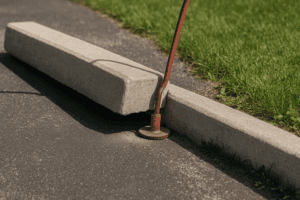
Contractors call these empty pockets “voids.” Your concrete slab is heavy. Just one section of a standard garage floor can weigh thousands of pounds. When the dirt washes away or settles, that massive slab is left suspended over a void with zero support underneath it. Eventually, gravity wins. The slab cracks, dips, and settles right into that hole.
You know what? It’s not just the weather causing this. Sometimes, the initial builder just didn’t compact the soil correctly when your neighborhood was first developed. They rush the grading process, pour the concrete, and move on to the next lot. Ten years later, you are the one left dealing with a sunken, sloping mess where you park your truck.
The Domino Effect of a Sloping Slab
A cracked floor is just a cosmetic issue. Wait, no—that is actually a massive misconception. A sloping floor is a structural problem that silently damages your property over time.
When your garage floor sinks, it pulls away from the foundation walls. It creates gaps. Those gaps are like an open invitation for water, pests, and cold air to invade your home. Plus, garages in northern Utah are rarely just for parking cars. We store our expensive ski gear, camping equipment, and power tools out there.
Here are the silent threats you face when you ignore sunken concrete:
- Dangerous tripping hazards: A one-inch height difference between slabs is all it takes to cause a nasty fall. If you have kids running around or older relatives visiting, that uneven ledge is a serious liability.
- Water pooling and ice traps: When snowmelt and slush drip off your car’s wheel wells, the water naturally flows to the lowest point. If your floor slopes toward the back wall instead of the driveway, water pools against your drywall. It rots the wood. It grows mold. In January, that standing water turns into a slick sheet of ice right where you step out of your car.
- Vehicle suspension strain: Hitting a two-inch drop every single day puts unnecessary wear and tear on your car’s tires and suspension system.
- Pest invasions: Mice and insects love the dark, damp voids underneath a settled concrete slab. It gives them a safe highway straight into your lower walls.
Tearing It Out Isn’t Your Only Option (Thankfully)
Most homeowners assume that fixing a bad garage floor means tearing the whole thing out. They picture jackhammers, clouds of dust, massive dumpsters sitting in the driveway for weeks, and a sky-high contractor bill.
Honestly, replacing the slab is usually overkill. Unless the concrete is crushed into a million tiny gravel-sized pieces, we can save it.
You have options. You can pay a crew to demolish the old floor, haul away the heavy chunks, bring in new gravel, compact it, and pour fresh concrete. Then you wait days for it to cure before you can even walk on it. Or, you can choose Concrete Leveling.
| The Repair Factor | Traditional Replacement | Mud Dog Jacking |
|---|---|---|
| Total Cost | Extremely high | Usually 50-70% less |
| Project Time | Multiple days or weeks | Just a few hours |
| Cure Time | 7 to 28 days | Drive on it same day |
Concrete Lifting—often called mudjacking or polyurethane injection—is the smart alternative. It fixes the root cause of the problem by stabilizing the soil, rather than just throwing new concrete over bad dirt.
Let’s Talk About How Mudjacking Actually Works
The concept of foundation repair through slab lifting is pretty brilliant. Instead of replacing the heavy slab, we simply push it back up from the bottom.
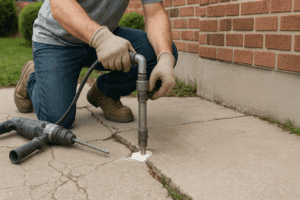
We start by drilling small, strategically placed holes directly through the sunken areas of your garage floor. These holes are surprisingly small—usually about the size of a penny. You hear the loud, familiar whir of the hammer drill, a puff of chalky gray dust flies up, and we are right through to the dirt below.
Next, we attach a specialized pump to those holes. We inject a thick, structural material right into the empty voids hiding underneath your floor. Some folks still use a traditional limestone and water slurry for this. Others use a high-tech, expanding polyurethane foam. As the material flows into the dark void, it fills every single crevice. It compresses the loose soil.
Once the void is entirely packed, the hydraulic pressure begins to build. Slowly, almost magically, that massive concrete slab begins to rise. We monitor the lift with precision tools to ensure it stops perfectly flush with the surrounding concrete.
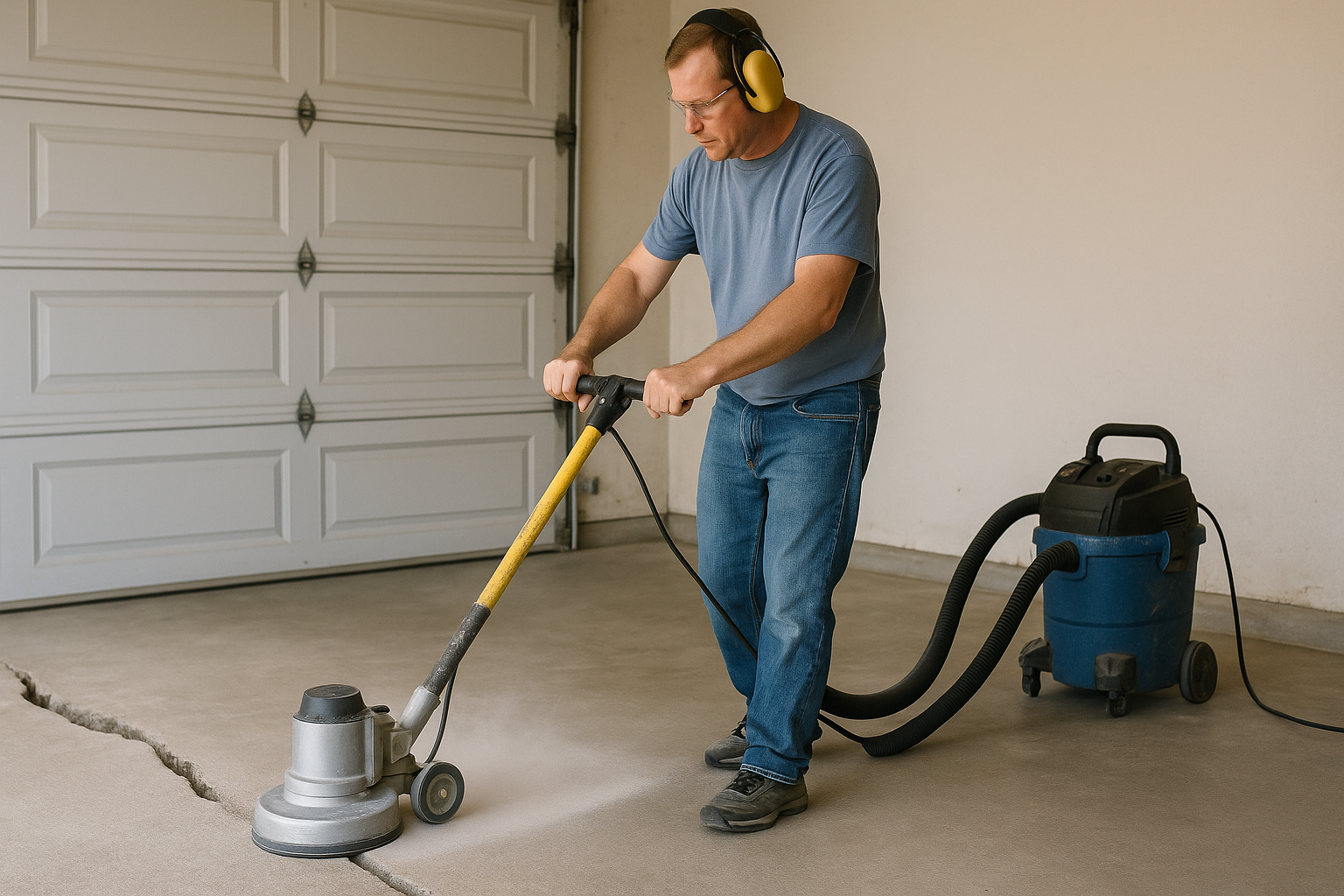
Finally, we clean up the small drill holes and patch them with a high-strength concrete mix. The patches blend right in. You sweep the floor, and you are done. No heavy machinery destroying your front lawn. No messy wet cement tracking into your house.
Can’t I Just Pour Some Self-Leveler Over It?
Every spring, local hardware stores sell pallets of DIY patching compounds to well-meaning homeowners. People think they can just buy a bag of self-leveling cement, mix it in a bucket, pour it over the sunken dip, and call it a day.
Please do not do this. Let me save you a frustrating weekend.
Self-leveling compounds are incredibly thin. They are designed to fix minor surface scratches or shallow birdbaths in the concrete, not to bridge structural gaps. If you pour a thin layer of cement over a slab that is still actively sinking, the new patch will crack and flake off within a few months. It is basically putting a fragile band-aid on a broken bone.
Plus, adding more weight to a slab that is already failing only makes it sink faster. The soil underneath your garage is already struggling to hold the original weight of the floor. Adding another hundred pounds of patch compound just accelerates the settling process. You have to fill the void underneath the slab first. There is simply no shortcut around that rule.
Timing the Fix in Northern Utah
Homeowners often ask if they should wait until the middle of summer to fix their uneven floors. The short answer is no. You should fix it the moment you notice the shifting.
In Ogden, the freeze-thaw cycle is relentless. Leaving a void open under your garage during the winter months is risky. The heavy slush that falls off your car melts, runs down the sloping concrete, and seeps right into the cracks. When the temperature drops overnight, that trapped water freezes and violently expands. A small hairline crack in November can turn into a massive, jagged trip hazard by March.
By lifting and sealing the floor now, you restore the proper slope. The water flows out toward the driveway, exactly as the original builders intended. You stop the erosion cycle in its tracks.
Reclaiming Your Garage Space
Your garage is the primary Entryway to your home. It should feel clean, safe, and welcoming. You deserve to pull your car in without gritting your teeth, waiting for that familiar clunk of the tires hitting a sunken ledge.
Uneven garage floors do not fix themselves. The soil will continue to compress, the voids will continue to grow, and the concrete will keep sinking. Addressing the issue early saves you an incredible amount of stress and protects your property value. You keep the original concrete, fix the bad soil underneath, and get your smooth floors back. It is a brilliant, straightforward solution.
Are you tired of hitting that annoying concrete ledge every single time you park your car? Reach out to Mud Dog Jacking today at 801-644-9122 to see how simple the fix can be. Request a Free Quote right now, and let our local experts lift your heavy slabs back to perfection.