You walk out your front door in the crisp morning air, coffee in hand, and suddenly your foot catches on an uneven step that definitely wasn’t that bad last year. Honestly, settling concrete is a frustrating reality for a lot of homeowners around here, but it doesn’t mean you have to rip out your entire porch. Let me explain how a simple process can completely fix your sinking Entryway and save you a massive headache.
What Makes Good Concrete Go Bad in Utah?
You know what? It is rarely the concrete’s fault. We pour these heavy, solid slabs—literally thousands of pounds of material—and expect them to stay put forever. But the dirt underneath has a mind of its own. Here in Ogden, our soil goes through some serious mood swings depending on the season. Between the heavy spring rains and the brutal winter freeze-thaw cycles we get along the Wasatch Front, the ground underneath your entryway expands and contracts constantly.
Over time, that constant, relentless movement creates voids. A void is just a fancy industry term for an empty pocket of air or loose dirt beneath the slab. Once those pockets get big enough, the heavy concrete above them simply gives up and sinks. It happens to driveways, patios, and yes, those crucial front Steps. You might even notice water pooling where it shouldn’t after a strong summer storm, which honestly just accelerates the whole sinking process.
Think about when you are out there shoveling snow in January. You scrape the shovel along the path, hit a newly raised lip of concrete, and practically jar your shoulders out of their sockets. It is agonizing. That lip didn’t appear because the concrete grew; it appeared because the adjacent slab sank into a void. Understanding this is the first step toward fixing the issue permanently.
The Big Debate: Tearing It Out vs. Pumping It Up
When your front walkway starts looking like a mild roller coaster, the first thought is usually, “Well, I guess I need to hire someone to demolish this and pour a new one.” But hold on a second. Tearing out concrete is loud, expensive, and leaves your yard a dusty mess for days.
Imagine it for a moment. You have contractors parking heavy machinery on your grass. They bring in jackhammers, waking up the entire neighborhood. Then, after the dust finally settles and the heavy debris is hauled away, you have to wait days for the new pour to cure before you can even walk to your own mailbox. Who has time for that?
Concrete Lifting—sometimes called polyurethane concrete raising or mudjacking—is almost always a smarter choice for homeowners. Instead of treating the symptom by pouring new concrete over bad soil, lifting addresses the root cause directly. We pump specialized material right under the slab to push it back into its original place.
Here’s a quick breakdown of how these two options compare:
| Feature | Concrete Replacement | Concrete Lifting |
|---|---|---|
| Cost Factor | Very high (labor, disposal, materials) | Usually 50-70% cheaper |
| Time Needed | Days to cure properly | Hours (walk on it immediately) |
| Mess Level | Jackhammers, dust, ruined yards | Minimal drilling, clean site |
See the difference? It makes you wonder why anyone would choose a full replacement if the concrete itself is still in decent structural shape.
The Science Behind the Magic (Kept Simple)
So, how do we actually get hundreds of pounds of sunken stone to levitate back to its original spot? It sounds a bit like magic, but it is actually just basic physics paired with some really cool equipment. We use a method that is precise, fast, and surprisingly quiet.
Here’s the thing—the process is remarkably straightforward when you have the right gear. Traditional mudjacking uses a thick slurry of dirt and cement, which works fine, but it is incredibly heavy. If your soil is already failing, adding hundreds of pounds of mud on top of it might just cause it to sink again later. That is why modern polyurethane foam is so fascinating. It weighs practically nothing compared to mud, yet it expands with enough force to lift a massive concrete Driveway.
Let’s walk through what actually happens when our team shows up at your house:
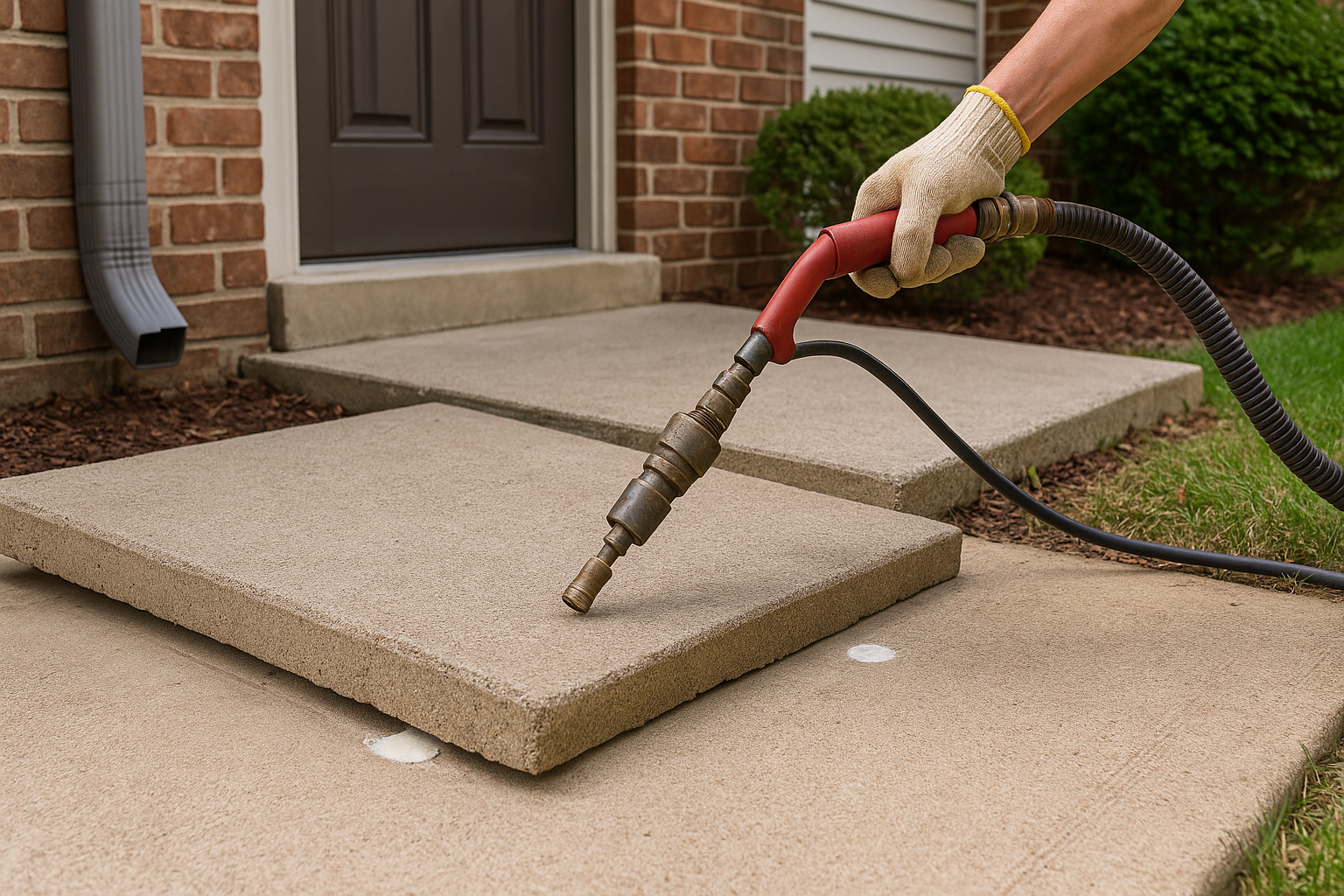
- Strategic Drilling: First, we drill tiny, carefully placed holes right through the sunken slab. They are small—usually the size of a dime or a penny—so they will not ruin the aesthetic look of your entryway.
- The Injection Phase: Next, we connect a specialized pump to those holes. We inject a high-density lifting material directly into the empty voids underneath. As this foam expands, it safely and gently forces the concrete back up.
- Precision Leveling: We monitor the lift millimeter by millimeter. This isn’t a guessing game; we make absolutely sure your steps align perfectly with your door threshold again.
- Patching It Up: Finally, we clean out the small drill holes and patch them with a durable cement mixture. Once it dries, you barely even notice we were ever there.
It’s kind of like inflating a flat tire. You don’t throw away the whole wheel; you just add what is missing underneath to get things rolling smoothly again.
Spotting the Warning Signs Early
Now, you might be thinking your uneven step isn’t a huge deal. A half-inch drop? That’s nothing, right? Well, yes and no. A tiny lip might seem completely harmless right now, but concrete issues rarely fix themselves. In fact, they only get worse as the seasons change.
Before you know it, that small trip hazard turns into a major liability right on your front porch. The postman trips over it, your kids scrape their knees, or your mother-in-law takes a serious tumble at Thanksgiving. Suddenly, ignoring the problem seems like a terrible idea. Catching the deterioration early is key to protecting your property.
You should probably get someone out to look at your entryway if you spot any of these glaring red flags:
- Sloping towards the foundation: If water is running toward your house instead of away from it, you are practically inviting basement leaks.
- Hollow sounds: Try tapping a broom handle on your porch. If it sounds hollow or drummy, there is a massive void growing down there.
- Noticeable trip hazards: Any height difference between two adjacent slabs is a giant flashing warning sign that the earth below is shifting.
- Sticking doors: Sometimes a settling porch can pull on adjoining structures, making your front door harder to open or close smoothly.
- Weed growth in joints: When slabs separate and sink, dirt fills the gaps. Before long, you are pulling dandelions out of your front steps every single weekend.
Honestly, catching these things early saves you so much grief. A quick Concrete Leveling service is incredibly affordable when the problem is still small. Wait too long, and the slab might bend and crack entirely, forcing you into that expensive, messy replacement we talked about earlier.
The Hidden Bonus: It’s Actually Better for Your Yard
Let me share something a lot of people overlook. Taking care of your residential concrete lifting needs isn’t just about making your house look pretty again. It is also a remarkably environmentally friendly choice.
Think about the sheer volume of waste generated by tearing out an old driveway or porch. All that heavy, broken concrete has to go somewhere, and usually, that somewhere is a local landfill. By choosing to lift and stabilize your existing slabs, you are keeping tons of perfectly good building materials out of the waste stream.
Furthermore, the polyurethane foams we use are specifically designed to be safe for the environment. They do not leach harmful chemicals into your lawn, and they won’t contaminate the surrounding garden beds. They simply expand, cure quickly, and stay put. Your grass stays green, your flowerbeds remain untouched, and you get to feel good about choosing a repair method that doesn’t trash the planet.
Why Your Entryway Matters So Much
Your front entry is the very first thing people experience when they visit your home. It sets the tone for everything else. A beautiful, level walkway says that you care about your property. On the flip side, cracked, sinking steps can make even the nicest house look a little neglected.
Your home is your sanctuary. It is where you host summer barbecues, welcome lifelong friends, and unwind after a long day at work. When your front entry looks terrible, it slowly chips away at that sense of pride. Sometimes people try to fix these gaps themselves by slathering self-leveling caulk or cheap concrete patch from the hardware store over the trip hazard. You know what? It always looks terrible. It’s like putting a bandage on a broken arm. The underlying void is still there, quietly mocking your DIY efforts while the slab continues to slowly inch downward.
Plus, let’s be real—life in Utah is busy enough without stressing about your walkway falling apart. Whether you are prepping to sell your house and need maximum Curb appeal, or you just want a safe place for the neighborhood kids to run around, solid ground is simply non-negotiable. Mud Dog Jacking has seen pretty much every kind of sinking concrete disaster you can imagine, and we love showing homeowners how easily it can be reversed. You just need a solid team that understands local Ogden soil conditions and has the right tools in the truck.
Let’s Get That Concrete Back Where It Belongs
If you’re tired of tripping over your own front steps, it’s time to fix the problem for good. Give our friendly team a call at 801-644-9122 to discuss your sinking slabs, or easily Request a Free Quote on our website today. We’ll help you get your entryway safe, level, and looking fantastic again.