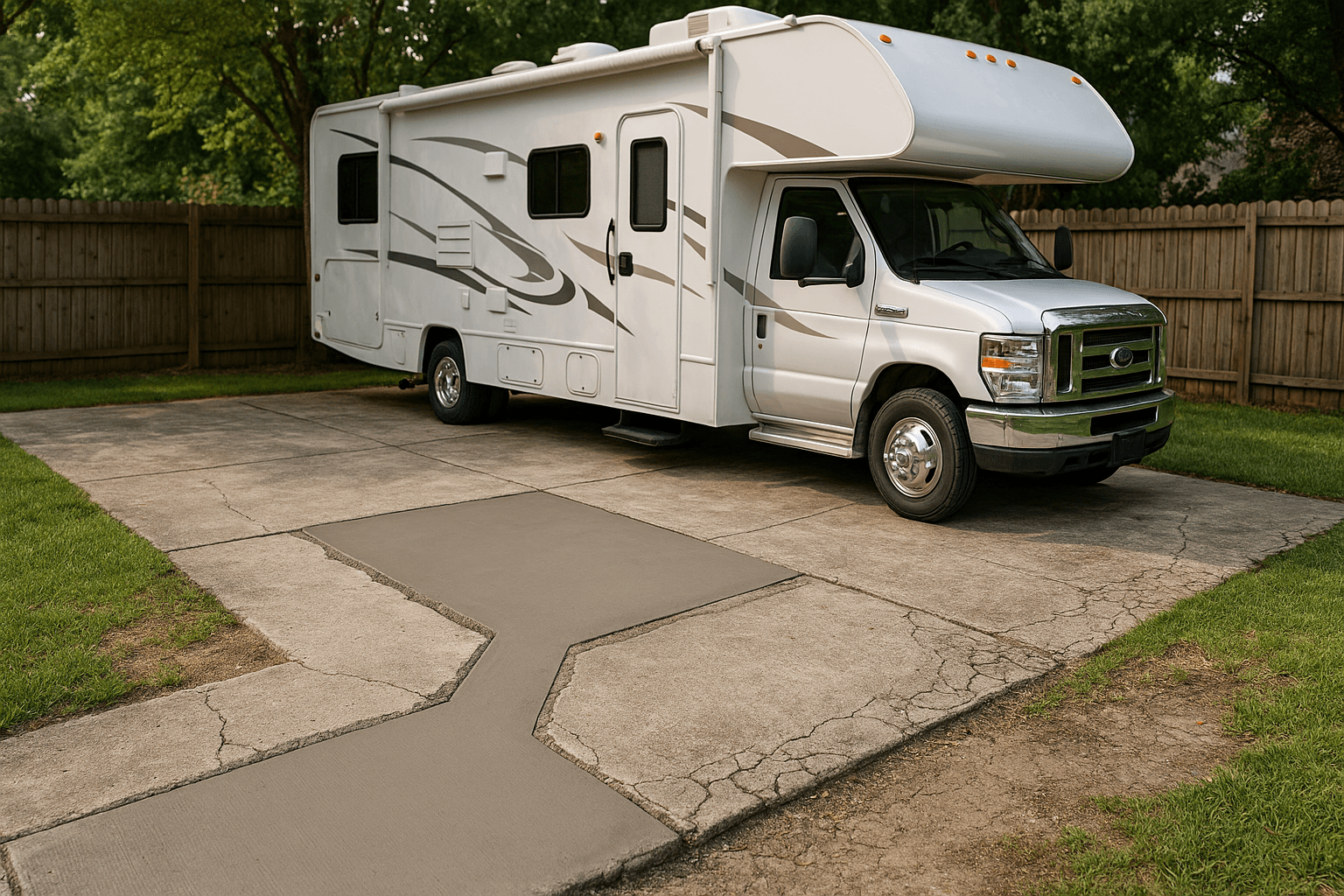
There’s nothing quite like pulling your rig into the Driveway after a long weekend in the mountains, ready to unwind. But that relaxed feeling can disappear pretty fast when you look down and see your RV Pad sinking, cracking, or tilting in a way that just doesn’t look right. It’s frustrating, right?
So, why is the concrete acting up?
You might be wondering how a massive slab of concrete, which seemed indestructible when it was poured, ends up looking like a topography map after a few years. Concrete settlement isn’t usually the fault of the concrete itself. It’s almost always about what’s going on underneath it.
Here in Ogden, the soil tells a complicated story. We deal with a mix of clay and sandy soils depending on exactly where your home sits along the Wasatch Front. When that soil wasn’t compacted perfectly before the pour—or if nature has just taken its toll—you get voids.
Think of voids like air pockets under a sticker. If you press down on the sticker where there’s no sticky backing, it dents. Now, apply that logic to a 10,000-pound RV sitting on a concrete slab. If the dirt below has washed away or settled, gravity is going to win every single time. The concrete has nowhere to go but down.
The Ogden freeze-thaw cycle is brutal
Let’s be real for a second. We love the seasons here, but they wreak havoc on hardscapes. You know how the roads get pot-holed every spring? Your RV pad is going through the exact same trauma.
Water is the main culprit here. When snow melts or we get those heavy spring rains, water seeps into the cracks and joints of your concrete. Then, the temperature drops below freezing at night. That water turns to ice and expands. This process, known as the freeze-thaw cycle, pushes the concrete slabs apart or lifts them up (we call that heaving).
When the ice melts, it leaves a gap. Do this fifty times a winter, and suddenly your perfectly level pad is a tripping hazard. It’s not just an eyesore; it’s actually dangerous for your recreational vehicle. Uneven pads can stress your RV’s suspension or leveling jacks, leading to repairs that are way more expensive than fixing the concrete.
Wait, do I have to rip it all out?
This is the question everyone asks first. “Do I need to hire a crew to jackhammer this whole thing up and pour new cement?”
Honestly? Probably not.
Tearing out concrete is loud, messy, and incredibly expensive. You’re paying for demolition, haul-away fees, new materials, and labor. Plus, you have to wait weeks for the new concrete to cure before you can park your trailer on it again. Who has time for that?
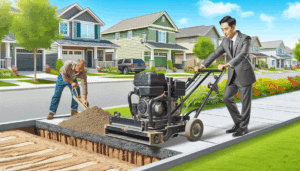
There is a smarter way to handle this. It’s called Mud Jacking (or sometimes Concrete Lifting). It’s a technique that has been around for a long time because it works. Instead of destroying the concrete, we use the slab you already have and just give it a lift.
How the magic happens
Okay, it’s not actually magic, but the results can feel like it. Let me explain how the process works so you aren’t left guessing.
First, Mud Dog Jacking drills small holes—about the size of a quarter—strategically through the sunken sections of your RV pad. It’s not random; we look for where the voids are. Next, we pump a specialized slurry mixture (that’s the “mud”) through those holes under high pressure.
This mixture flows into the empty spaces below the concrete. Once the voids are full, the pressure builds up and gently lifts the slab back to its original position. It’s kind of like inflating an air mattress, but with way more force and precision.
Once the slab is level, we patch the holes with concrete, and you’re good to go. The best part? You can usually drive or park on it the very same day.
Why leveling beats replacing
You know what? Let’s break this down simply. Making decisions about home repairs usually comes down to two things: time and money.
| Feature | Concrete Replacement | Mud Jacking / Lifting |
|---|---|---|
| Cost | High (Labor + Materials) | Affordable (Fraction of the cost) |
| Time to Fix | Days to weeks | Hours |
| Mess Factor | Dust, debris, ruined lawn | Minimal clean up |
| Cure Time | 7-28 days | Immediate use |
It’s a pretty clear winner. Unless your concrete is pulverized into rubble, lifting is almost always the better option. It saves your landscaping from being torn up by heavy machinery, and it keeps more money in your pocket for your next road trip.
Protecting your investment (and your tires)
Your RV or travel trailer isn’t cheap. You spend a lot of time maintaining the engine, the roof, and the interior. It makes sense to pay attention to where it sleeps, too.
Parking a heavy rig on an unlevel surface for months at a time causes issues you might not see immediately. Tires can develop flat spots or rot unevenly if water pools around them because the pad doesn’t drain correctly. Drainage is actually a huge part of this.
Concrete pads are supposed to have a slight slope to let water run off. When slabs sink, that slope changes. Suddenly, water is pooling right under your axles or running toward your home’s foundation instead of away from it. By leveling the pad, you restore the proper water flow. It’s a small fix that prevents massive headaches later.
Is this a DIY job?
I love a good weekend project as much as the next guy. But here’s the thing: concrete lifting isn’t something you can do with a bag of mix from the hardware store.
Some homeowners try to just fill the cracks with caulk or patch material. While that might stop some water from getting in, it doesn’t solve the structural problem. The void is still there. The slab is still unsupported. Eventually, the patch will fail, and the slab will sink further.
To do this right, you need the hydraulic pumps and the knowledge of how hydraulic pressure affects concrete. Push too hard in the wrong spot, and you crack the slab further. It requires a professional touch to know exactly where to lift and how much slurry to inject.
The aesthetic factor
Let’s not pretend looks don’t matter. We all take pride in our homes. A cracked, sunken RV pad looks neglected. It lowers the Curb appeal of your entire property.
If you’re thinking about selling your home in the future, a damaged pad is a red flag for buyers. They see cracks and think “foundation problems” or “expensive repairs.” Fixing it now keeps your property value where it should be. Plus, it just feels better to walk out to a clean, level surface.
What about the gaps?
When we lift the concrete, we aren’t just pushing it up; we are stabilizing the ground. But you also need to think about sealing the deal—literally.
After the mud jacking is done, caulking and sealing the joints and cracks is the final step to longevity. You want to stop water from getting back under there and starting the cycle all over again. High-quality silicone or polyurethane sealants are flexible, so they move with the concrete during those Ogden temperature swings without breaking the seal.
When should you call the pros?
You shouldn’t wait until the slab has sunk three inches. The sooner you catch settlement issues, the easier (and cheaper) they are to fix.
Keep an eye out for these signs:
- Water puddling where it shouldn’t.
- Ideally, adjacent slabs should be flush; check for “trip hazards” where one is higher than the other.
- Cracks that seem to be getting wider.
- A hollow sound when you tap on the concrete (that means there’s a void underneath!).
- Your RV looks tilted even when the jacks are down.
If you spot any of these, it’s time to get an assessment. Ignoring it usually leads to the concrete cracking into smaller pieces, and once it breaks into rubble, mud jacking can’t save it. Then you really are stuck paying for a full replacement.
A sustainable choice
Here is something people don’t often think about. Repairing your concrete is actually the more environmentally friendly choice.
When you rip out a driveway or RV pad, that old concrete usually ends up in a landfill. Then, new cement has to be manufactured, which is a process that creates a significant amount of carbon emissions. By choosing to restore what you have, you’re reducing waste. It’s a small thing, but it counts.
Getting ready for the season
Whether you are winterizing the trailer or getting it ready for the summer camping season, checking the pad should be on your checklist. A stable pad means a stable rig. It means you aren’t stressing the frame of your vehicle while it sits in storage.
It’s easy to overlook the ground we walk on, but for heavy machinery, that foundation is everything. You wouldn’t build a house on a swamp, so don’t park your RV on a hollow shell of concrete.
Mud Dog Jacking is here to help
We know the soil in Ogden, and we know how frustrating concrete repairs can seem. But it doesn’t have to be a nightmare. At Mud Dog Jacking, we specialize in taking sunken, uneven concrete and making it solid again. We want you to focus on planning your next road trip, not worrying about your driveway.
If your RV pad has seen better days, don’t wait for the cracks to get worse. Give us a call at 801-644-9122 to discuss your options. Request a Free Quote today and let’s get that concrete back on the level.